
Boarding check-in checklist
Collect emergency contacts, medication, belongings, photos, and owner acknowledgement.
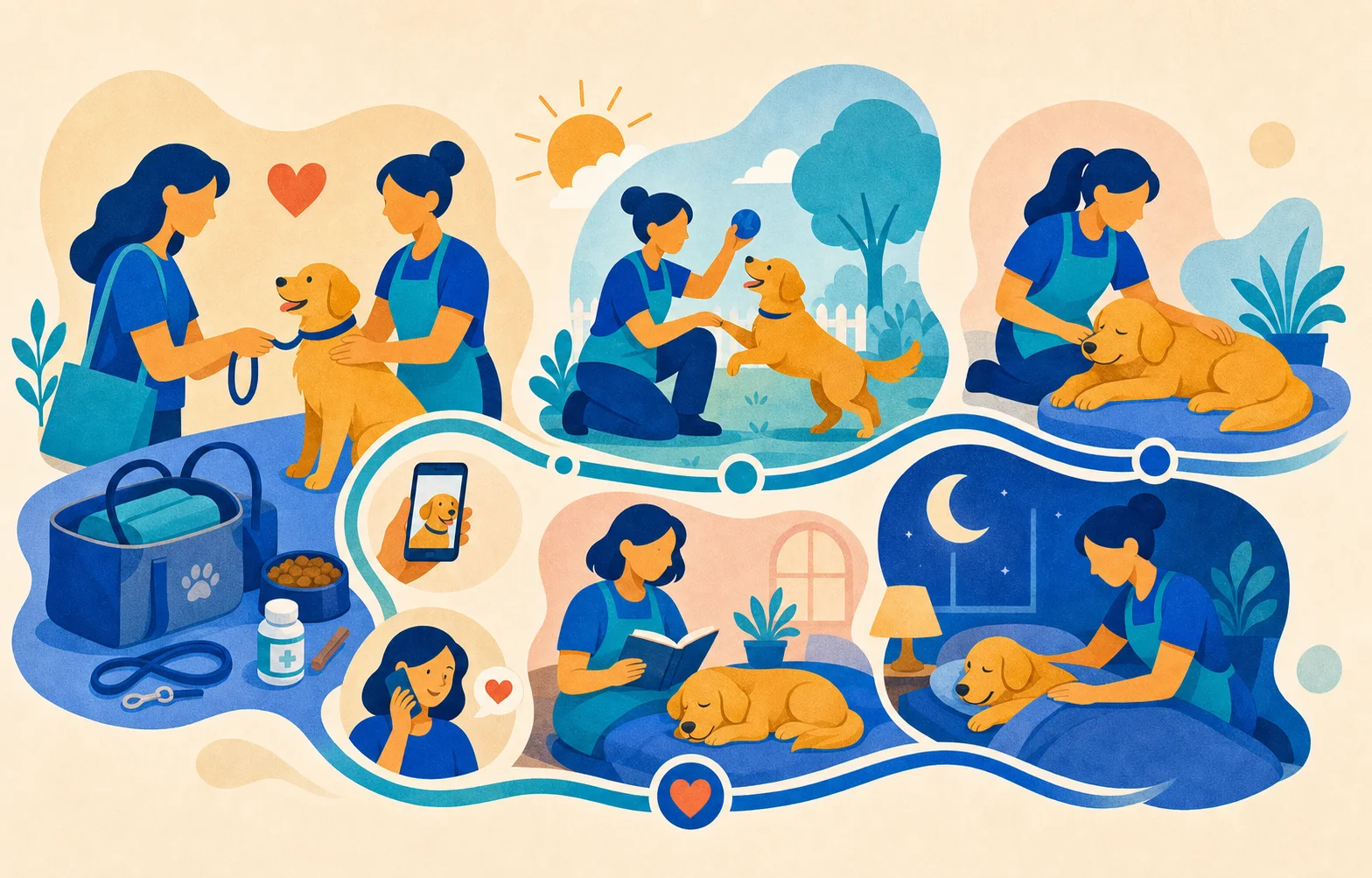
The check-in decides how smooth the stay will be
Boarding is different from a normal appointment. The pet is not only coming in for a service. The pet is staying under the business care for hours or days, and the owner expects the team to know what to do if something changes.
A strong check-in process protects the pet, the owner, and the business. It reduces missing information, creates a clear record, and helps the team handle the stay with confidence.
Start with owner and emergency contacts
The owner contact is not enough for boarding. If the owner cannot be reached, the team needs a secondary emergency contact. This is especially important for overnight stays, rabbits, senior pets, medical boarding, and pets with known health concerns.
Capture the owner name, phone number, emergency contact name, emergency contact number, and any instruction about who can make decisions if the owner is unavailable.
Record the stay type and timing
Daycare and overnight boarding should be treated differently. Daycare may happen within the same day with flexible collection time. Overnight boarding should have clear check-in and check-out dates.
If the business charges by day, make the billable days clear on the invoice. The team should be able to understand the stay from its check-in and check-out timing without relying on a separate duration field.
Capture belongings and check-in photos
Owners may bring food, medication, toys, carriers, towels, or special items. A written list is useful, but photos are even better. Check-in photos help the team remember what arrived with the pet and reduce disputes during check-out.
Photos should be treated as private business data. They are operational records, not public images. They should be stored securely and only shown to authorized users.
Medical boarding needs more structure
If the pet is under medical boarding, the form should collect diagnosis, medication name, dosage amount, frequency, timing, steps to administer, start and end dates if applicable, and warning signs to watch for.
The medication checklist should be generated from those details. A vague note such as "give medicine twice a day" is not enough. The staff member needs to know what to give, how much to give, when to give it, and how to record that it was done.
End with acknowledgement
A boarding form should include clear acknowledgement. If a signature is required, collect the owner name and signature. If the owner has already acknowledged and no signature is required, the wording should say that clearly.
The best boarding forms are not beautiful for the sake of it. They are clear, complete, and easy to refer back to during the stay.